Posts

Home to Canada

Image
I have returned to the "land of the silver birch" in Ontario, Canada, Georgian Bay. Here, the precambrian shield stretches like a thirsty animal into the water, swirls of time emblazoning its stony surface lined with quartz. The blue water of the Bay is 80 degrees, perfect for an afternoon swim. Like this, up here, I live between eternity and time for a nap in a hammock suspended between two pines in a grotto. I sailed with my daughter yesterday, and for the first time she held the tiller, and learned a little about wind. I'm rather struck by how much she knows already. Earlier today, I canoed with her and was similarly struck by how she knew how to make whirlpools with her paddle and also how to do a cross-bow cut, something I didn't learn until I was a good ten years older. But this is what she is: a fourth generation Georgian Bay girl. She's brave. She's got a knowledge of the water and wind beyond anything I've taught her. Tonight we'll build a fir...

THE HOLY CROSS

Image
(image from steed griffin, cryptotypographer: http://steedgriffin.tumblr.com/page/2) Every now and then, a piece pops up in the news that helps me connect a few dots. Today's piece is the article about Gunnar Samuelsson, a quiet minister from Sweden who has spent the last several years trying to figure out where we got the idea that Jesus Christ was crucified. His conclusion: the word "stauros" that has been translated for more than 2000 years to mean "cross" denotes any variety of long wooden objects. This resonates with an exhibit I saw a few years ago of various artifacts from Biblical times. Among the remarkable objects was a part of a human foot with a metal spike driven through it attaching it to a piece of petrified wood. The tour guide pointed out that this is the only found evidence that human bodies were nailed to wood as a form of torture and execution. I remember wondering how that can be possible if crucifixion was the number one favorite form of ex...

SIESTA KEY

Image
This is my beach. Siesta Beach. On Siesta Key, on the Gulf Coast. This is my beach. It has white sand I walked on every day when I was a teenager. This is the beach that saved my life, kept me off drugs, the beach that was my boyfriend for all those years I didn't have one. This is the beach my grandmother and I walked along in winter, imagining the white sand into snow. It's the beach I kicked soccer balls on while walking its miles with my best friend. It's the beach where I lost the key to my father's Audi while my parents went to England on vacation, before I had a license to drive. It's the beach that mysteriously coughed up the key so I could drive home, astonished. For how many years have we been using the phrase "of mythical proportions?" The oil in the Gulf of Mexico has reached "mythical proportions." They are now saying that since the underwater robot (what planet are we on?) bumped into the cap (the one we actually watched that 24 hou...

What To Do Now That the Masonic Lodge Is Open For Arts Events

Image
It's a bit too much of a dream come true. I've had dreams about this place. I mean, really. However it is possible to geo-locate where dreams take place, I have woken knowing I dreamed about the darned Masonic Lodge at the corner of Woodfin and Broadway. Of course, in my dreams it has all these secret rooms and magical walls that disappear when you say certain words, and walls within walls, thin spaces revealing entire secret universes. So, when the mountain xpress published photographs of the interior hall--now available for rent for public events--naturally I was a little dismayed. Granted, the room with columns painted with scenes of King Solomon's activities is mighty cool, but in my dreams, well, they would have been holograms. But, here it is. The post-Masonic age. All the inside secrets have been let out in one way or another. Some books are weirder than others and some references stranger than others--from writings about Oumros, the strange black powder sought after...

Writing About Architecture

Image
It's Tuesday afternoon. The two labradors, Chloe (black and small) and Sir Isaac Newton (white and enormous) are napping next to the rabbit's cage (Brownie) while a storm brews outside. Wordfest is over as of 2 weeks ago and last night I read my writings about architecture for the first time in public, while Mike Oppenheim's amazing photographs of Asheville's architecture shone on the screen behind me. I shouldn't have read, I realized. I know it well enough to talk extemporaneously and there's some other kind of energy that comes from me when I do. It's because I've fallen in love with architecture. Hearing someone talk about what/whom they love is always better than hearing some read something from a page. I started writing about the architecture of Asheville in February. At first I was all clumsy, not knowing how to talk about buildings. There's something mysterious about learning the language of things, particularly the language of buildings. Thi...

ELEVATE, a poem and what I think is the process behind it

Image
ELEVATE Elevate me, O God, into what is highest within me. Bring me to the sky where loose clouds loosen more and show me what I cannot touch with my skin. Loosen me so I break open like the sky above a thirsty earth. Elevate me. O God, loosely, like clouds in their skin. Touch what I cannot thirst after on this earth. Loosen me until I cannot break and show me what is highest in me, bringing within what is more, what breaks ceaselessly open. Elevate me, O God, to the loosened earth where sky is a show of what I cannot touch and clouds break open against my skin. Break me open with thirst. Like the sky above the earth, bring me what is highest, loose and within. Elevate me, O God, within, where loose clouds show me how I break open like a thirsty earth. Into what is highest in me, bring your touch. Loosen me more, your cloud, this skin. What is highest, open within this earth. *** This is the poem that will appear in the paper tomorrow as the first of the Asheville...

Diary of a Fascination

Image
I get fascinated with things. Constantly. Lately, I've been fascinated by a story, an Asheville story. It involves a woman who lived nearly a century ago. Her name is Mary Tillinghast. She was a stained glass artist who was hired by architect Bertram Goodhue to create windows for Asheville's Trinity Episcopal Church in 1912. I stumbled upon her name while writing an essay about the church for my current writing project (read: obsession) on Asheville's architecture. When I took on the project I had no idea how deeply it would affect me. After all, they are buildings. I thought I would learn the vocabulary and take it from there. But no. Something happens when we learn the vocabulary. Its whole history sort of grafts itself onto the psyche through the words. It is as though the buildings want to speak and now that I've engaged them in conversation they virtually throw stuff at me to write about. In the case of the Trinity Church, what got thrown was the name of Mary Tilli...

The Eloquence Within

Image
I might spend the rest of my life trying to articulate something. . . and this is what I suppose most writers do--something happens and we spend the rest of our lives trying to put words to it. Emerson, Eliot, Jung all had mystical experiences in early adulthood (James Joyce in adolescence) and spent the rest of their lives trying to put words to it, and in some cases waiting for it to happen again. I think about my mystical experiences and I am delightfully amazed, even though at the time I was rather frightened. But no mystical experience has been quite so transformative as losing my hearing. It is one thing to see "letters" in the clouds then find them in poem I wrote days before then learn they have a meaning in Hebrew and Arabic, and then there is getting a diagnosis of hearing loss and living it through to its conclusion in deafness. There is an immediacy to the mystical experience. The "refragrancing" as it is called in Buddhism takes moments or months, but t...

Coagula et Solve

Image
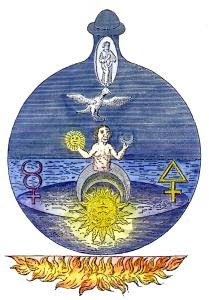
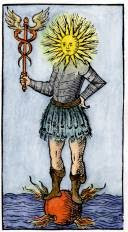
First of all: thank you Adam McLean for use of Barchusen's above version of The Crowning of Nature ( http://www.levity.com/ ). Coagula et Solve. One of the basic tenets of alchemy and of life. But geezh we don't hear about it. It basically means that human life is constantly moving between two states--one of being firm and structured and another of being all hell broke loose. Once we max out on the former, circumstance moves us back toward the latter. We coagulate--come together. We dissolve--solve. Solve is a state of destabilization--a change is moving through life so we have to loose our preconceptions of what must be. That is, if we are going to survive it. Some people live in a seemingly constant state of solve. Too fluid, too changeable, not enough structure and form. Some people in a seemingly constant state of coagula. Too rigid. Disdainful of change. Resistant to the effects and lessons of life. Any paradigm shift is a movement from coagula (a fixed set of ideas) throu...

Opus Contra Natura

Image
The Work Against Nature is a phrase powerful enough to drive anyone away from something. But in alchemy the work against nature--Opus Contra Natura-- is merely a turning inward, a searching within which yields development and awakening. It is a "work against Nature" because "nature" means physical nature. The opus contra natura draws our attention toward spiritual nature, the deeper truth of things. In working with individuals who are just starting to write "again" the opus contra natura is a riot in the heart. The words just start flowing and, in some, they bring with them deep sorrow and joy which must be moved through. I have been, of late, made aware (through being dumped by one such person and realizing my life is full of them) of personality disorders and their onset at either age 7 or in the adult years. Such disorders--borderline personality disorder, narcissistic personality disorder and the like--occur because a child is not given the safety and ...

Alchemy and The Red Book

Image
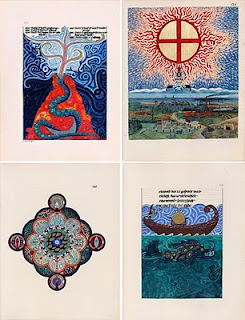
When Jung was having his initiation, which occurs in the writing and art of The Red Book, it was his introduction into the rights of alchemy, this wild formula for converting the matter of one's life into spirit. I contacted Adam McLean about Jung's work in Alchemy. McLean is the founder of Hermetic Journal and a leading voice in the study of alchemical texts. McLean labors intensely to reproduce and publish the arcane and little known alchemical works on which Jung--and, since, countless others--based his work. McLean states on his stunning website (levity.com) that he was once enamoured of Jung's work. I emailed him asking him, basically "what happened" and he replied (within hours) that he simply prefers working in the originals. I respect that, and i also see it as in deep keeping with the nature of alchemy itself--a return to, and journey through, origin into the highest self. McLean's work allows us to see the sources Jung turned to--the dark and peculia...
Image
I picked up a copy of Jung's Alchemical Studies and, while getting my hair done by the amazing Guadalupe Chavarria, an alchemist in his own right for what he can do with a pair of scissors and that "diuturnity of intense imagination" he examined me with when I walked into his shop all shaggy and unshorn in the throes of last minute Christmas browsing, opened this unassuming little white book. Following the experience denoted in the Red Book, Jung devoted the rest of his life to trying to comprehend it. He calls all the other stuff, aside from the Red Book, his attempts at integration. This volume is his exploration of a number of alchemical writings--The Secret of the Golden Flower, the writings of Zosimus and Paracelsus and exploring the alchemical concepts of mercurius and the philosophical tree. Jungian psychoanalysis draws heavily on alchemy and theosophy. This is just an example of the master psychic archeologist's explorations, a warm-up to the later works throu...

Why I Love This Stuff

Image
Next to my bathtub I have three reading choices. A long outdated (Madonna and A-Rod) People magazine, a more recent issue of Yoga Journal, and The Dictionary of Alchemical Imagery by Lyndy Abraham. This third thing is the one I reach for. It's not a New Age thing at all. It's this woman's Doctoral Thesis at Cambridge University and to write she she ventured into the depths of the Vatican's secret libraries and cruised the coffers of ancient memory to dredge of these defitintions of things I never used to think about. Things like: alembic/limbeck, the red dragon, albification. I read this book with remarkable pleasure. For me, it's like reading the poems of Shakespeare. . . only maybe even better. I feel this is my own private world, a book few others venture to pay nearly $40.00 for on Amazon (used: $29.45). It's a language I share with these ancient minds. . . women and men who influenced great poets and composers. . . Goethe. . . Rilke. . . Jung. . . they ...

Why the Red Book is Red

Image
In Alchemy, there are many symbolic systems. Often, a practitioner would create his or her own system. These would possess a variety of properties. The symbols are polyvalent, an understood and accepted fact, so that once a practioner "knew" the basic structure of the alchemical process one could read another's work (often rendered in artwork) without being confounded. It was also understood that the process is reiterative and in constant flow (why detachment is necessary--one is never "finished") so a reader or viewer would not expect the writer or artist to deliver the information in a sequential manner. A third property of the systems involves concealment. While the information begged to be shared, it could only be shared in a way that would reveal its content only to one's peers. These were not breadcrumb trails for strangers but rather records maintained for safe-keeping. One writer described the alchemical knowledge as "a secret set afloat across ...

Alchemy and Narcissism and The Red Book

Image
This book is different from Jung's other books. He writes that this is the book that started the whole Jung thing. Everything he wrote after The Red Book was an echo of the Red Book, of the experience he has within these pages. This is not a book about mystical experience. This book is his mystical experience. In it he uses the writing and art as transformative tools in moving across the gap in the mind between conscious and unconscious aspects of the self. The writings and mandalas guide him, show him what he needs to see, believe, think and surrender to. This is art without vanity. It's his journey into his soul. After The Red Book, Jung strove to make sense of what had happened within him. I think it's funny how we so easily take our sanity for granted, meaning, more often than not, we just assume we're perfect and don't need to do any more "work." People don't attempt to understand what's going on, or what has happened within us. Recently I...

The Red Book

Image
Last week I went into Malaprops with my daughter. We had some time to browse prior to a reading I was doing at Posana. I bought some Moleskins for a workshop group for the following day, some pens. I bought my daughter a pair of journals, one for her and one for a friend. I was paying for it all when I saw it. The Red Book. The secret book by Carl Gustav Jung, sealed away in a chilly Swiss bank for a century and now sitting before in all its red immense glory, beckoning to me. Not saying "buy me, buy me, buy me" (though I knew I would) but rather "open me, open me, open me." Let me tell you a thing about me and books. When I took a group of my boy students (as their teacher at a boys' boarding school) to go see the Dead Sea Scrolls in Charlotte five years ago, by the time I exited the exhibit, they'd all found new girlfriends and had bought them sodas. I had spent that long looking--no: gazing--into the strange cases built to house them, complete with low li...

Giving The Soul Tree to Leonard Cohen

Image
Well, last night Leonard Cohen played in Asheville. I drove into town a few hours before the concert, approached the front desk at the Haywood Park Hotel and said, "I have a present for Leonard Cohen" and the concierge saw my book and said she'd have it taken to his room. I sat down on the comfy sofa and wrote in it: from one Canadian poet to another. . . thank you for your song. . . with love, Laura Hope-Gill. Then I handed it to the woman and presumably someone took it to Mr. Cohen. How do I describe this? Leonard Cohen has been such a profound influence on me. His poetry, along with Galway Kinnell's, has shown me how poetry can move the mind through darkness, lighting it as it goes. Yes, it's a wonderful gift for poets to be able to describe what is and even what is inside what is. Then there are these poets who go even beyond the what is and still find something there. Cohen and Kinnell are among the living who do this, and The Soul Tree is rooted in this kin...

The Soul Tree

Image
Coming out in August from Grateful Steps Publishing in Asheville, NC. View pages at www.thehealingseed.com/the-soul-tree . Ordering info at www.gratefulsteps.com.

A Small Anatomy of Change

Image
Have you ever noticed how during times of great change, a swell of energy comes into our lives? Much of the energy appears to work "against" the change but the effort it takes to overcome the negations that work to push us through into the next part of our lives. This past week I have worked harder than I've ever worked. Several deadlines for writing pieces for various publications--one local, one statewide, one regional (still ramping up to the national I guess)--struck at once. To meet them, I had to write hard-well-fast. It's my daughter's last week of school so there's been "splash day" and today's Kindergarten awards day. The Wednesday Night Odyssey class took me to a deep level of teaching and planning, and of course the fair at the mall opened. All of this in addition to my job for which I marketed five books all week, rather successfully. All of this the week after I rent an office and step into the community of healers. In a turn-of-the-...

A Room of Her Own

Image
Virginia Woolf says in her famous essay that in order to be a writer, a woman needs 500 pounds a year (cash) and a room of her own. For the low-low price of just under 500 dollars a month, I got a room of my own today. Aside from my house, in which I share several rooms of my own with my daughter, I now have this. It is a small room. It is part of the Women's Wellness and Education Center. It is immense to me because it represents my movement, as poet, into several new realms. The first of these is my own "private practice" as writing teacher, editor and creativity coach. I have been moving toward this through a series of fits and starts--and peculiarly strong signals from the universe--that it's time. But the other realm is that of medicine. Women's Wellness and Education Center is a women-run holistic care center for women who are pregnant, women who want to be pregnant and women who have little interest in pregnancy but love a great massage and yoga or pilates ...